





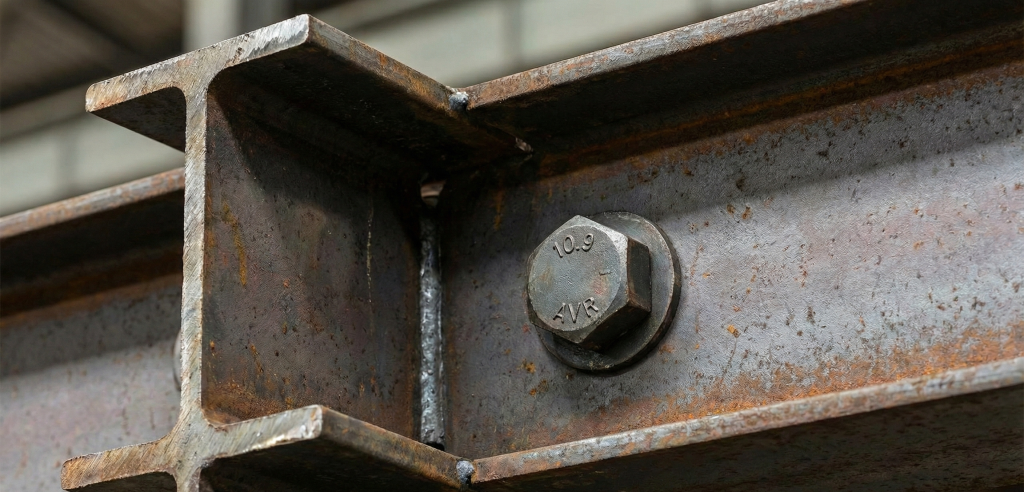
DIN 6914 bolt, refers to hexagonal bolts with wide keyways (wide head) used in high-strength steel construction joints. Widely used in the industry “HV Bolt” name. These bolts have a larger head than standard bolts, so that higher torque can be applied during tightening and the load is distributed over a larger surface. They are specially designed for vibrating and heavily loaded structures that require preload. They are usually produced in grade 10.9 and are used for friction coupling connections. DIN 6914 bolts must be used as a set with DIN 6915 nuts and DIN 6916 washers for system integrity. Corresponding in current European norms EN 14399-4 standard.
| Feature | |
| Standard | DIN 6914 |
| Material | Carbon Steel, Alloy Steel |
| Type | Wide Head Hexagon Bolt (HV Type) |
| Quality | 10.9 (Standard) |
| Coating | Hot Dip Galvanized (HDG), Geomet, Dacromet, Black |
| Tooth Type | Metric (Standard Thread) |
| Measurement Range | M10 to M64 |
| Production Method | Cold forging, hot forging |
| Thread Direction | Right-Hand Thread (standard) / Left-Hand Thread (upon request) |
- Steel bridges and viaducts
- Wind energy turbine towers
- High-rise steel buildings (skyscrapers)
- Industrial hangars and stadium roofs
- Railway and highway infrastructure projects
- Heavy machine chassis
- ISO 9001:2015 Quality Management System
- ISO 14001:2015 Environmental Management System
- ISO 45001:2018 Occupational Health and Safety Management System
- EU Declaration of Conformity (PED) certificate (Compliance with the Pressure Equipment Directive)
- Our production processes, DIN, EN, ISO, and ASTM is fully compliant with the standards
- Upon request EN 10204 3.1 certificate is provided
The most obvious difference is the head structure. The head width (keyway) of DIN 6914 is larger than that of a standard bolt of the same diameter. It also has a shorter thread length and is only produced in 10.9 grade.
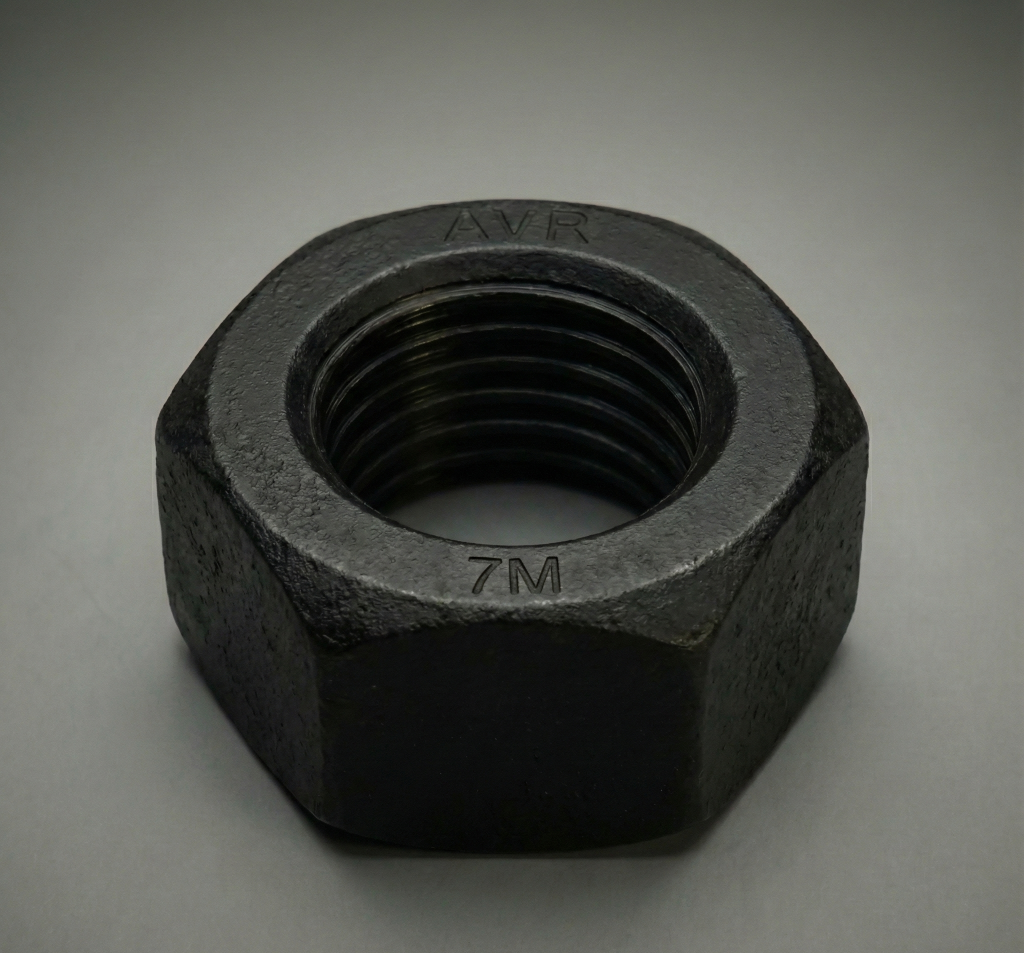
DIN 6914 bolts work as designed in combination with DIN 6915 nuts and DIN 6916 washers. Standard nuts cannot withstand the high clamping force exerted by the HV bolt and can strip threads.
There is a great risk. Normal bolts have a smaller head surface. When high torque is applied, the bolt head can be buried, crushing the washer or steel underneath. In addition, the thread lengths and tolerances are not designed to maintain the constant preload required by the steel construction. Structural integrity is compromised.

 Türkçe
  English
  Русский
  Deutsch
  العربية