





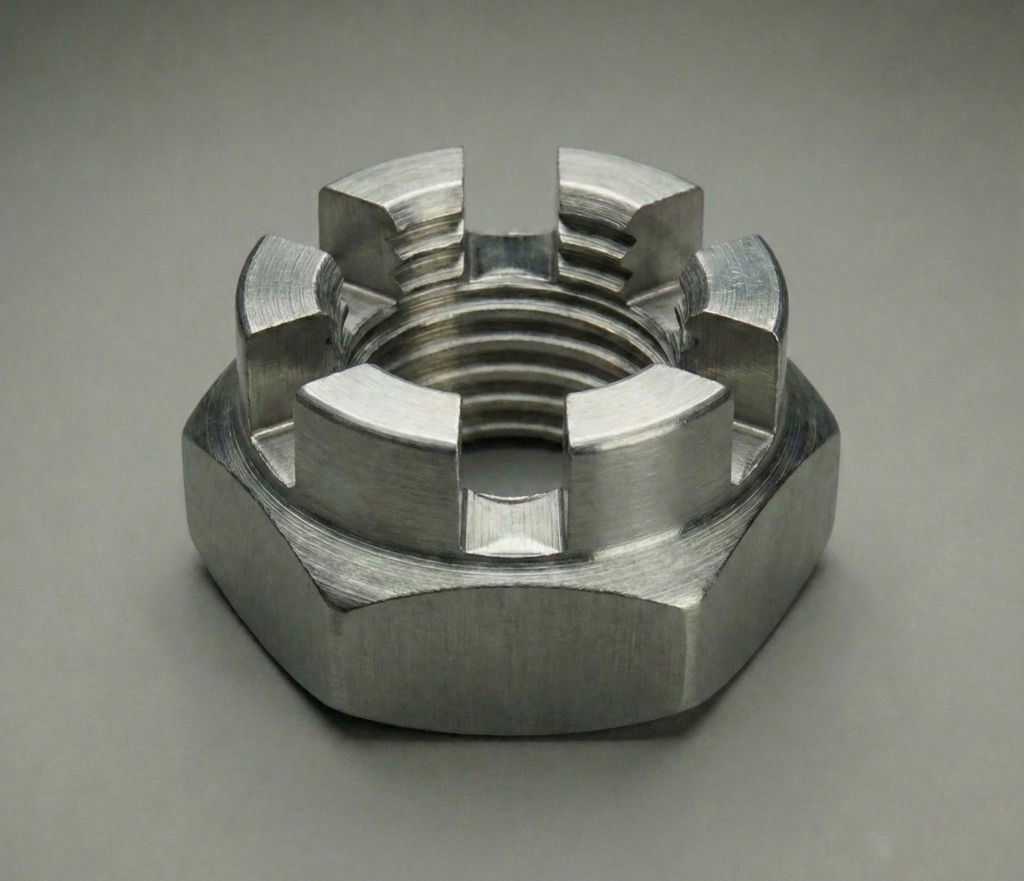
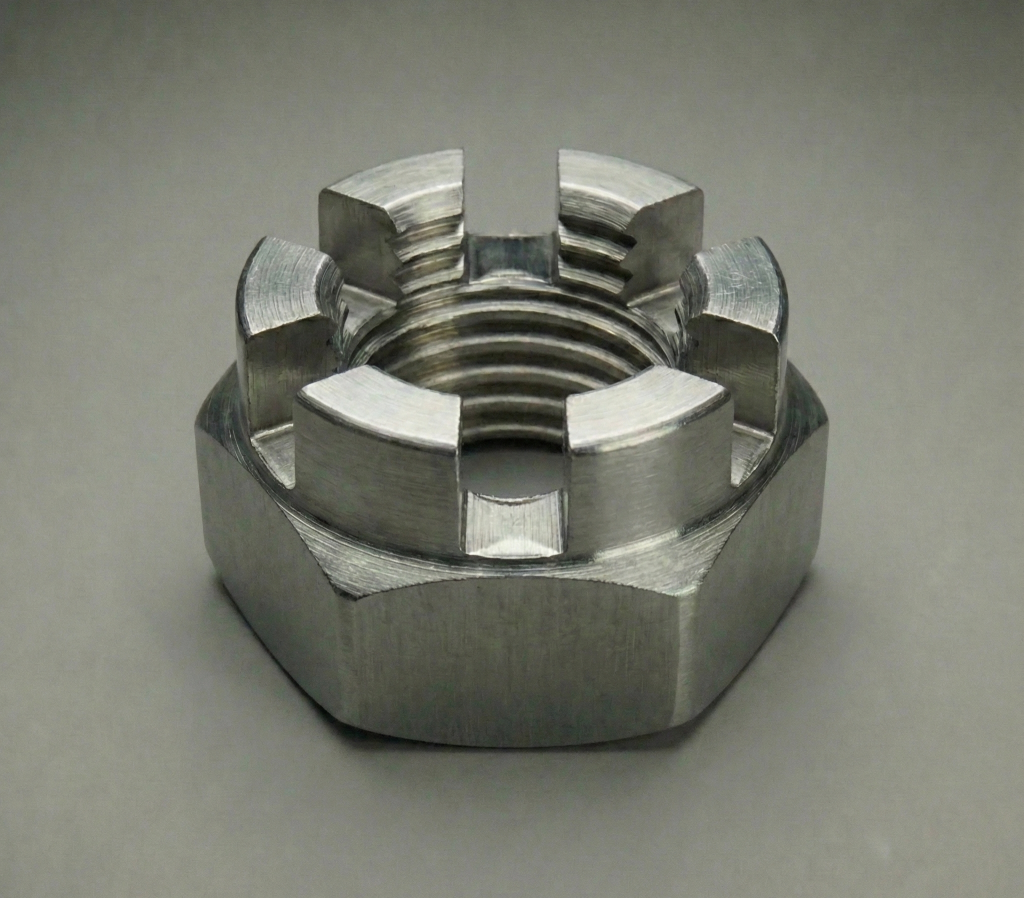
DIN 937 manufactured in accordance with the standard low-profile crown nuts, It allows for securing with a safety wire or pin in bolt and stud connections. Thanks to the slots on the top, it is preferred to prevent loosening, especially in vibrating environments. Its low-profile design provides ease of use in tight mounting spaces. It is frequently used in applications where secure connections are critical.
| Feature | |
| Standard | DIN 937 – Low Profile Crown Nut |
| Material | Carbon Steel, Alloy Steel, Stainless Steel |
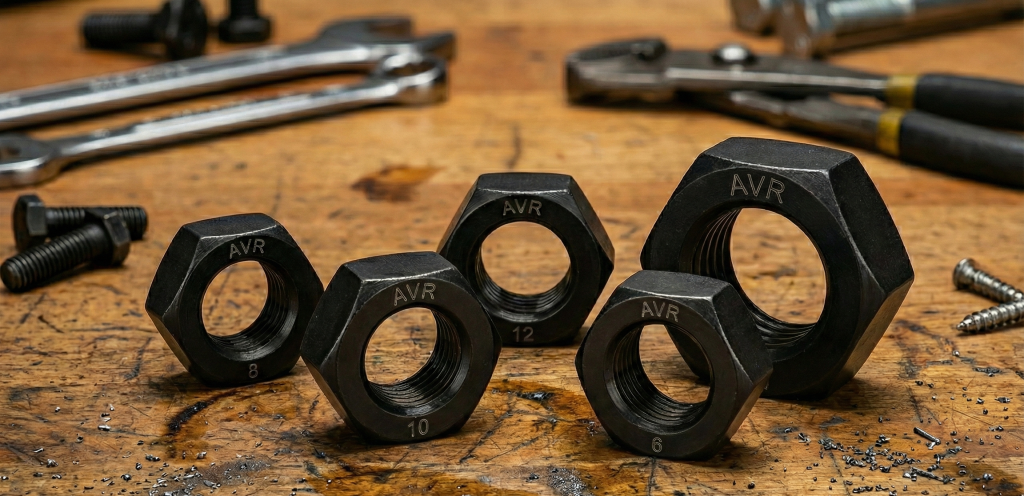
| Material Quality | 4, 5, 6, 8, 10, 12, A2, A4 |
| Coating | Electrogalvanized (White/Yellow), Hot-Dip Galvanized (HDG), Nickel, Black Oxide, Dacromet, Geomet |
| Tooth Type | Metric Coarse Thread, Metric Fine Thread (optional) |
| Measurement Range | From M10 to M64 |
| Production Method | Machining (standard), Hot Forging (special production for large diameters) |
| Thread Direction | Right-Hand Thread (standard) / Left-Hand Thread (upon request) |
- Places where nut height is critical in tight installation spaces
- Using double nuts on bolts and studs in anti-loosening systems (as lock nuts)
- Machine manufacturing and equipment assembly
- In the automotive industry, particularly in chassis and suspension parts
- In construction and steel structure connections
- Power plants and piping systems
- Compact connections in the white goods, electrical appliances, and furniture sectors
- As a secondary safety nut in systems operating under vibration or dynamic loads
- ISO 9001:2015 Quality Management System
- ISO 14001:2015 Environmental Management System
- ISO 45001:2018 Occupational Health and Safety Management System
- EU Declaration of Conformity (PED) certificate (Compliance with the Pressure Equipment Directive)
- Our production processes, DIN, EN, ISO, and ASTM is fully compliant with the standards
- Upon request EN 10204 3.1 certificate is provided
DIN 937, with slots on the top, can be used with a safety wire or pin low-profile crown nut It is standard. It has a lower height than DIN 935. It is generally preferred in systems where the connection must not loosen.
DIN 937 nuts are typically manufactured from various materials such as carbon steel (e.g., grades 4, 8, 10 strength), stainless steel (such as A2/304 and A4/316), and brass. Material selection should be based on the conditions of the environment in which the nut will be used (humidity, chemical exposure, temperature), the required strength, and corrosion resistance. Due to its low-profile design and its frequent use as a counter or secondary lock nut, vibration, loosening risk, and space constraints should also be considered in material selection.
Commonly used materials are as follows:
Carbon steel: It provides strength from low to high with grades such as Class 4, 5, 6, 8, 10, and 12.
Alloy steel: Used in systems operating under high temperature and pressure (e.g., ASTM A193 B7, B16 bolts).
Stainless steel: Offers high corrosion resistance with A2 (304) and A4 (316) grades; preferred especially in applications involving outdoor environments and chemical exposure.
Brass / Copper alloys: Electrical conductivity is used for low magnetic effect or decorative applications.
DIN 937 crown nuts are designed for use in confined spaces thanks to their low-profile construction. Slots on the top allow for locking with a safety wire or pin. These features reduce the risk of loosening in high-vibration environments, ensuring secure connections. They are typically used as lock nuts or secondary safety elements.
Typical applications:
Defense and aerospace: Connections secured with wire or pins in vibrating environments
Machinery and equipment: With the low-profile advantage in the connections of moving parts
Construction and infrastructure: Secure fastenings in confined spaces
Energy and piping systems: As a secondary safety nut in flanged connections
Rail systems: As a relaxation preventer in systems operating under vibration
Automotive and heavy vehicle industry: Vibrating parts such as the chassis and suspension
Electrical equipment and appliances: Places requiring secure connections in compact designs
DIN 937 nuts are preferred as an alternative to standard crown nuts due to their low mounting height and secure fastening advantage. It is important to use them in critical applications with the correct thread, quality, and material selection.

 Türkçe
  English
  Русский
  Deutsch
  العربية