





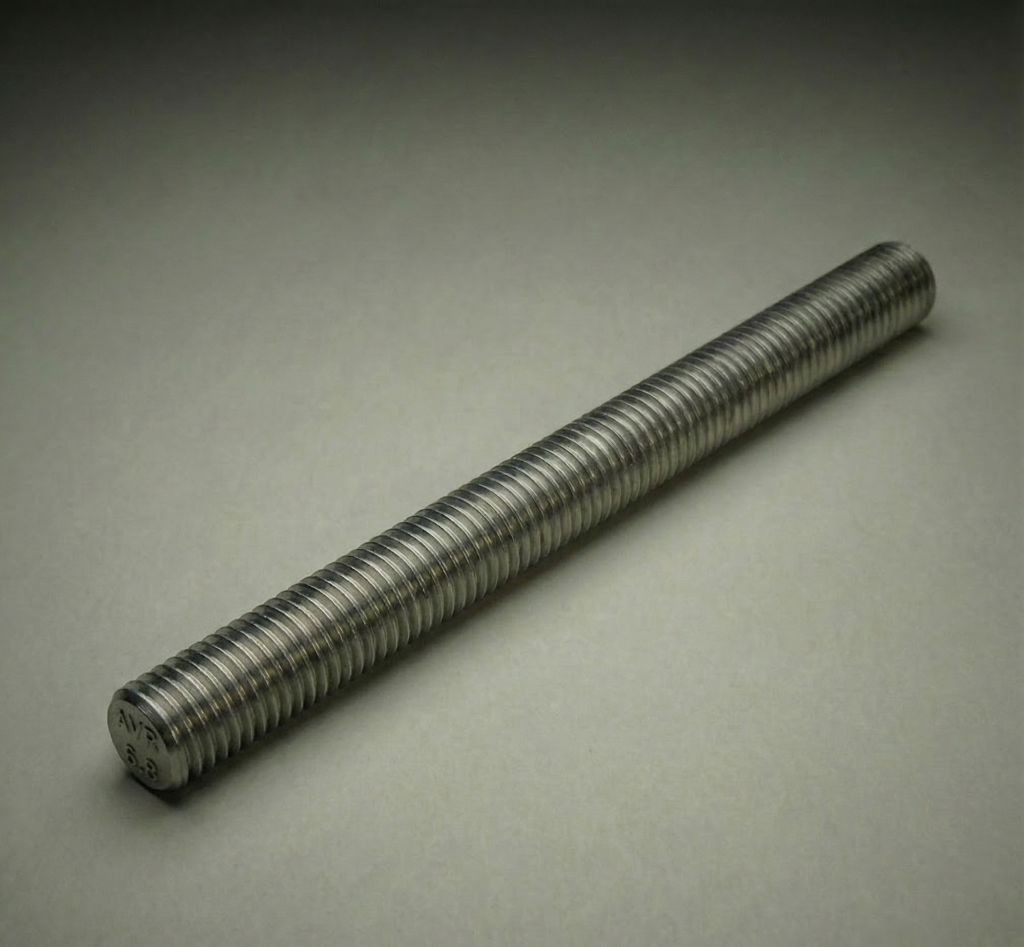
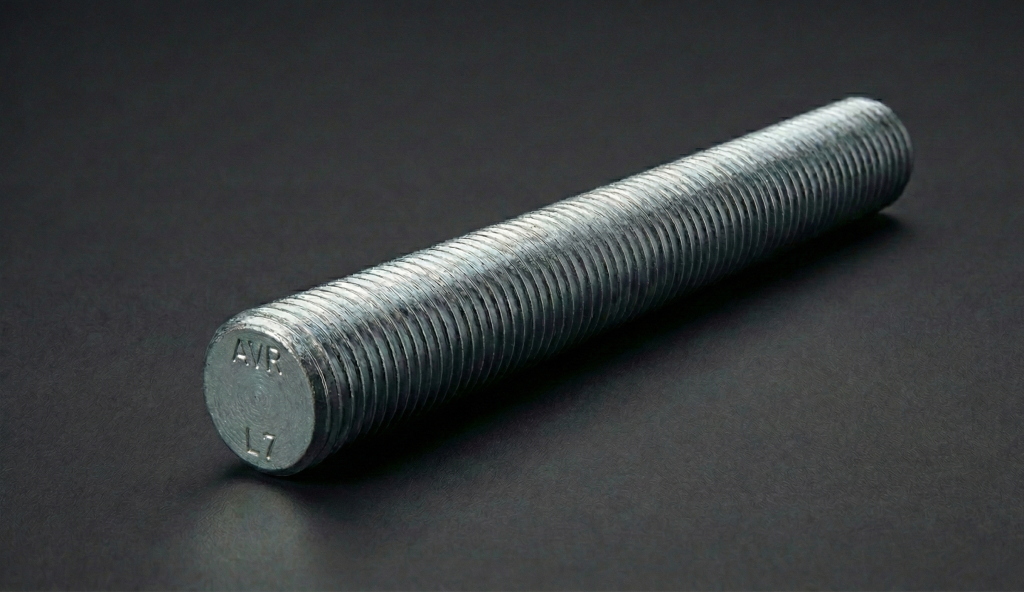
Full-threaded straight anchors are steel rod-shaped fasteners with threads cut along their entire length. These products offer significant advantages in terms of both ease of installation and position adjustment, as they are designed to be secured with nuts at both ends. Preferred especially in reinforced concrete structures, machine foundations, and equipment fastening, these anchors offer high tensile strength, reliable load-bearing capacity, and flexible usage.
| Feature | |
| Type | Flat Anchor (Full Tooth) |
| Material | Carbon Steel, Alloy Steel, Stainless Steel |
| Coating | Electrogalvanized (White/Yellow), Hot-Dip Galvanized (HDG), Nickel, Black Oxide, Dacromet, Geomet |
| Tooth Type | Metric Coarse Thread, Metric Fine Thread – UNC / UNF (Inch) |
| Measurement Range | From M10 to M100, 1/2″-3″ |
| Production Method | Grinding or machining |
| Thread Direction | Right-Hand Thread (standard) / Left-Hand Thread (upon request) |
- Reinforced concrete foundation fixings
- Machine foot anchor connections
- Securing flanged connections
- Industrial equipment installations
- Connection points in steel construction systems
- Formwork fastenings in prefabricated structures
- Power plants and infrastructure projects
- ISO 9001:2015 Quality Management System
- ISO 14001:2015 Environmental Management System
- ISO 45001:2018 Occupational Health and Safety Management System
- EU Declaration of Conformity (PED) certificate (Compliance with the Pressure Equipment Directive)
- Our production processes, DIN, EN, ISO, and ASTM is fully compliant with the standards
- Upon request EN 10204 3.1 certificate is provided
It is not mandatory but is recommended depending on the environmental conditions. Especially if it will be used outdoors or in chemical environments. HDG (hot-dip galvanizing), Geomet Such coatings significantly increase corrosion resistance.
Yes, if desired left tooth It is applicable. This is preferred in special mounting systems or in vibrating environments to prevent loosening.
The material and coating suitable for the application environment, the correct diameter and length selection, and the tooth type and direction must be clearly specified. Additionally, any applicable project standards (e.g., ASTM, ISO, DIN) must be shared.


 Türkçe
  English
  Русский
  Deutsch
  العربية