





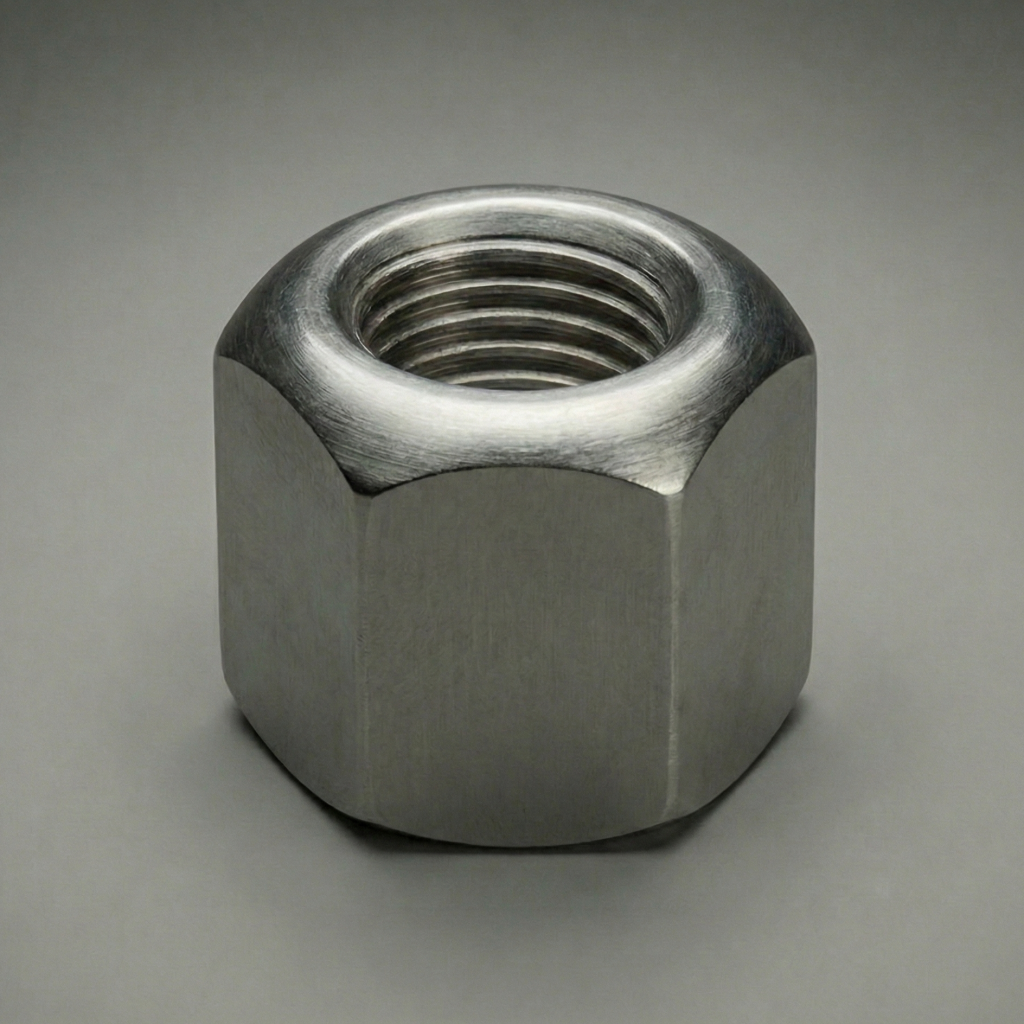
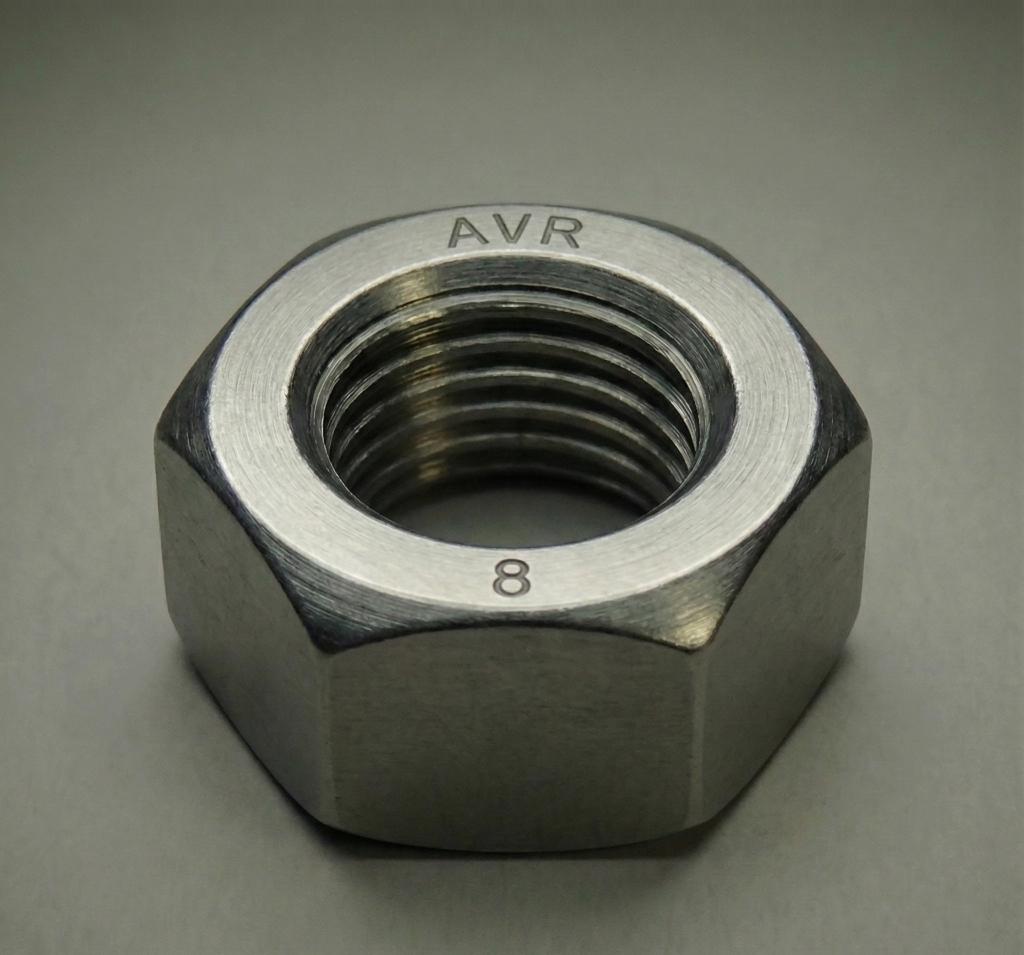
DIN 6330 manufactured in accordance with the standard hexagonal reinforced nuts, Thanks to their higher structure compared to standard nuts, they provide superior performance under heavy loads and in connections requiring high torque. These nuts, which are used especially with studs, are preferred to increase durability and safety in industrial assemblies.
| Feature | |
| Standard | DIN 6330 – Hexagon Reinforced Nut |
| Material | Carbon Steel, Alloy Steel, Stainless Steel |
| Material Quality | 5, 6, 8, 10, 12, A2, A4 |
| Coating | Electrogalvanized (White/Yellow), Hot-Dip Galvanized (HDG), Nickel, Black Oxide, Dacromet, Geomet |
| Tooth Type | Metric Coarse Thread, Metric Fine Thread (optional) |
| Measurement Range | From M10 to M48 |
| Production Method | Hot Forging, Machining |
| Thread Direction | Right-Hand Thread (standard) / Left-Hand Thread (upon request) |
- Flange connections made with bolts
- Pressure vessels, boilers, and industrial valve connections
- Heavy machinery and equipment installations
- Petrochemical and power plant applications
- Shipbuilding and offshore structures
- Industrial piping systems
- Fasteners under high torque and tension
- ISO 9001:2015 Quality Management System
- ISO 14001:2015 Environmental Management System
- ISO 45001:2018 Occupational Health and Safety Management System
- EU Declaration of Conformity (PED) certificate (Compliance with the Pressure Equipment Directive)
- Our production processes, DIN, EN, ISO, and ASTM is fully compliant with the standards
- Upon request EN 10204 3.1 certificate is provided
DIN 6330 is a standard for hexagon socket cap screws designed for high-profile and heavy-duty applications. These screws are longer in length compared to standard DIN 934 screws and increase the strength of the connection, especially when used with a drive.
Key features:
• The high structure provides wider contact by increasing the connection surface
• Reduces the risk of deformation even under heavy loads
• Suitable for use in critical systems such as flanges, valves, and pressure vessels
• Shows dimensional similarity with ISO 8673
DIN 6330 nuts are generally manufactured from various materials such as carbon steel (e.g., strength classes 5, 8, 10), stainless steel (such as A2/304 and A4/316), and alloy steel. Material selection should be based on criteria such as the environmental conditions where the connection will be made, the load amount, and the risk of corrosion.
Commonly used materials are as follows:
• Carbon steel: Provides strength from low to high with grades such as Class 5, 6, 8, 10, 12
• Alloy steel: For systems operating under high temperature and pressure (e.g., with B7/B16 bolts)
• Stainless steel: Offers high corrosion resistance with A2 (304) and A4 (316) grades
• Brass / Copper alloys: Generally not preferred, except for special applications
DIN 6330 nuts are preferred in heavy industry and critical engineering applications due to their high-strength construction and heavy-duty design. They are commonly used in bolted connections to secure flanges, valves, and similar equipment.
Typical applications:
• Pressure vessel and boiler connections
• Petrochemical plants and refineries
• Power plants (thermal, hydro, nuclear)
• Steel bridges and rail system infrastructure
• Heavy machinery and construction equipment
• Shipbuilding and offshore structures
• Industrial piping systems and flanged connections

 Türkçe
  English
  Русский
  Deutsch
  العربية