





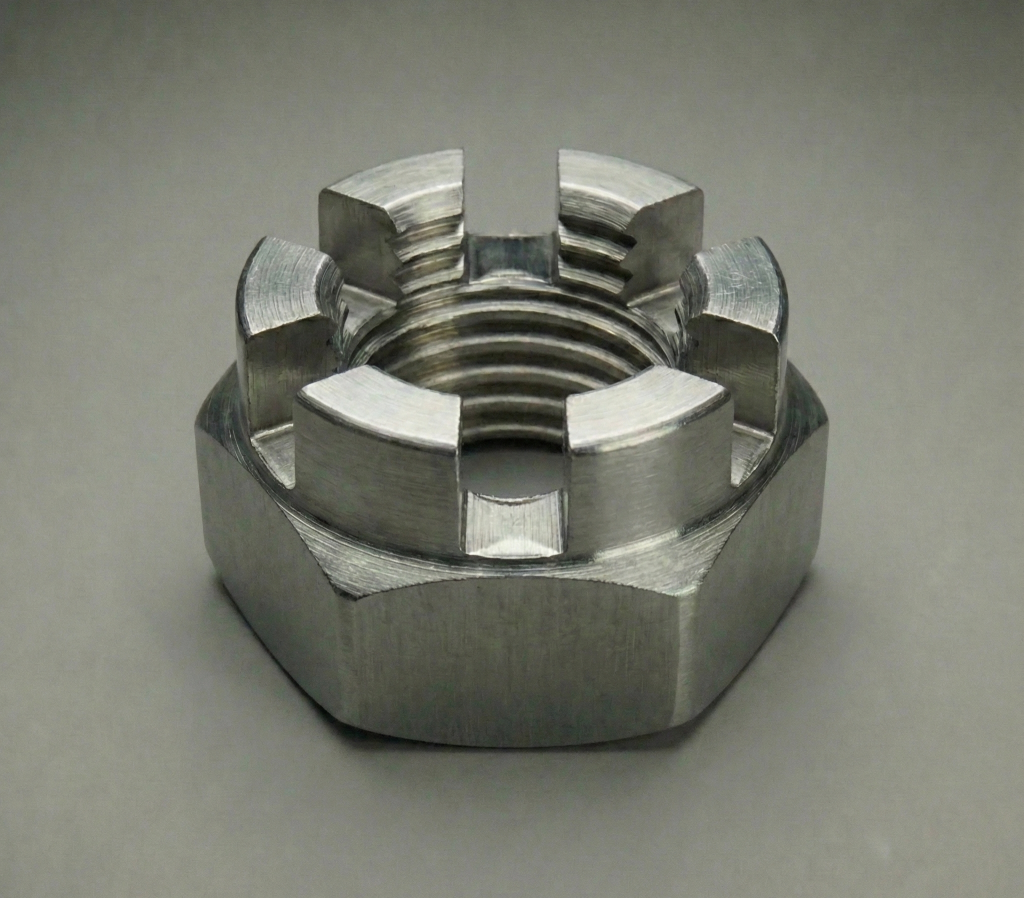
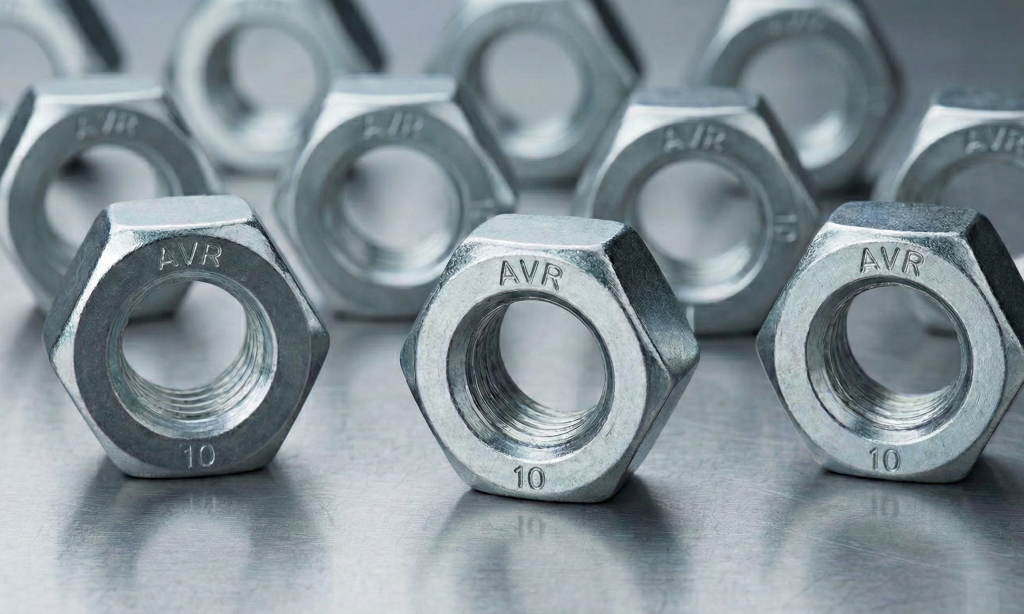
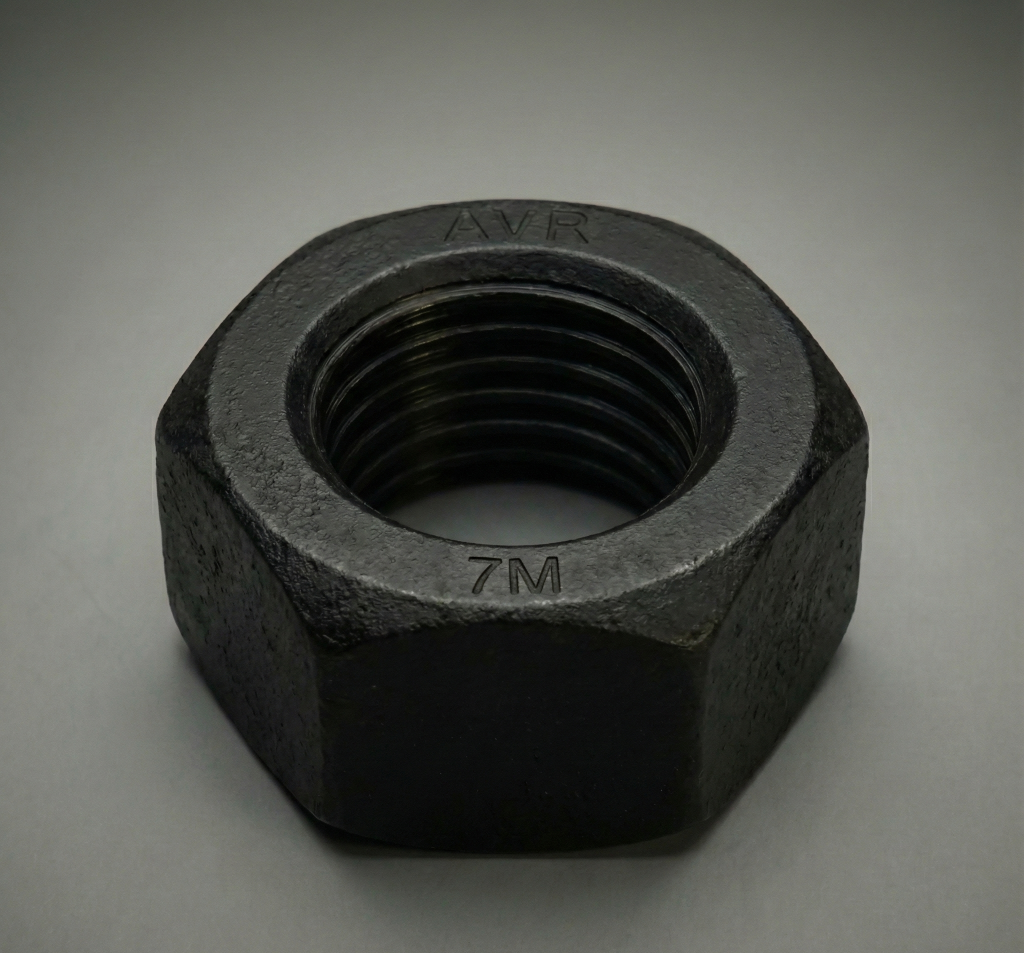
DIN 935 Our crown nuts, manufactured to industry standards, provide high-security solutions that prevent screw connections from loosening when used with bolts and studs. When used with a safety wire or pin, they ensure secure fastening in vibrating environments. Thanks to a wide range of material and coating options, they are preferred in many sectors, from the defense industry to heavy industry.
| Feature | |
| Standard | DIN 935 – Hexagon Slotted Castle Nut |
| Material | Carbon Steel, Alloy Steel, Stainless Steel |
| Material Quality | 4, 5, 6, 8, 10, 12, A2, A4 |
| Coating | Electrogalvanized (White/Yellow), Hot-Dip Galvanized (HDG), Nickel, Black Oxide, Dacromet, Geomet |
| Tooth Type | Metric Coarse Thread, Metric Fine Thread (optional) |
| Measurement Range | From M10 to M64 |
| Production Method | Hot Forging, Machining |
| Thread Direction | Right-Hand Thread (standard) / Left-Hand Thread (upon request) |
- Heavy machinery manufacturing and assembly
- Defense industry and rail systems
- Construction and steel structure systems
- Power plants and piping systems
- Transportation equipment, crane systems
- All industries requiring connection safety in vibrating environments
- ISO 9001:2015 Quality Management System
- ISO 14001:2015 Environmental Management System
- ISO 45001:2018 Occupational Health and Safety Management System
- EU Declaration of Conformity (PED) certificate (Compliance with the Pressure Equipment Directive)
- Our production processes, DIN, EN, ISO, and ASTM is fully compliant with the standards
- Upon request EN 10204 3.1 certificate is provided
DIN 935 is a German standard defined for crown nuts. These nuts prevent the screw connection from loosening by being secured with a safety wire or pin thanks to the slits (crown shape) at their ends. They provide higher safety compared to conventional nuts, especially in vibrating environments.
DIN 935 nuts are typically manufactured from various materials such as carbon steel (e.g., strength classes 4, 8, 10), stainless steel (such as A2/304 and A4/316), and brass. The choice of material should be based on the conditions of the environment in which the nut will be used (humidity, chemical exposure, temperature), the required strength, and corrosion resistance. Stainless steels are preferred in areas requiring corrosion resistance, while high-strength steels are preferred for connections under heavy loads.
Commonly used materials are as follows:
Carbon steel: It provides strength from low to high with grades such as Class 4, 5, 6, 8, 10, and 12.
Alloy steel: Systems operating under high temperature and pressure (e.g., with B7/B16 bolts).
Stainless steel: Offers high corrosion resistance with A2 (304) and A4 (316) grades.
Brass / Copper alloys: It is preferred in applications requiring electrical conductivity or for decorative purposes.
DIN 935 crown nuts, safety wire or pin lock is used in connections that require it. Thanks to this feature, especially high vibration or critical security is preferred in applications that require it. Typical applications:
Defense and aerospace: Earthquake-resistant connections
Machinery and equipment: Moving part connections
Construction and infrastructure: Permanent and secure fastenings
Energy and pipingPipe flange connections, turbine equipment
Rail systems: On-track systems, wagon couplings
DIN 935 nuts provide higher safety compared to standard nuts. at critical junctures its use is recommended.

 Türkçe
  English
  Русский
  Deutsch
  العربية