





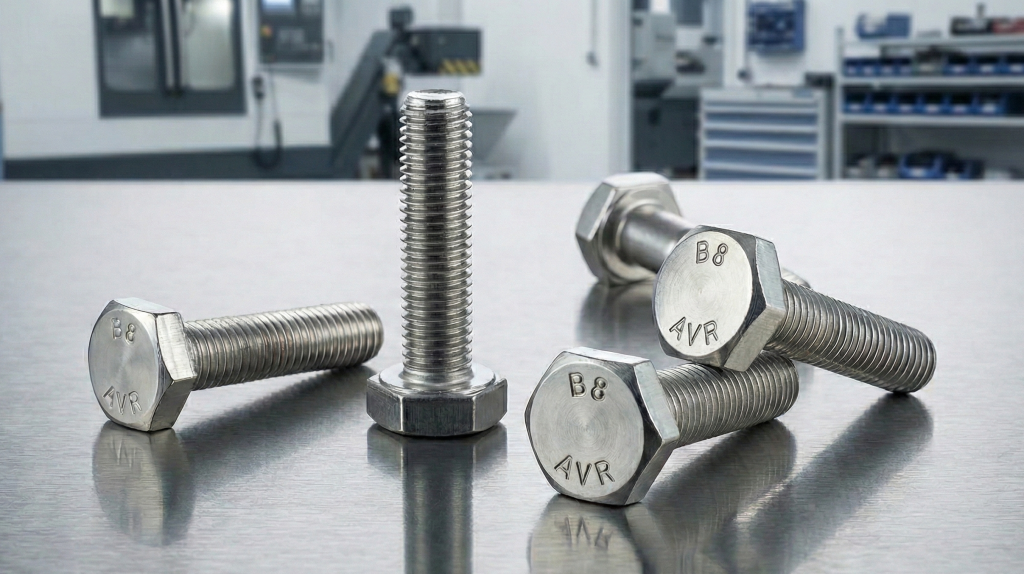
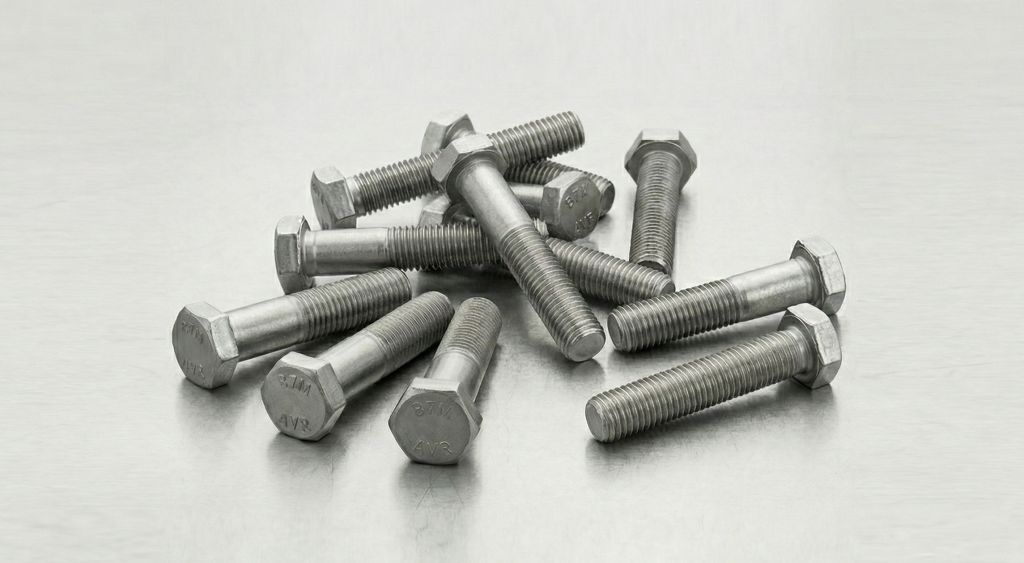
ASTM A193 Grade B8 bolt, is specially designed for industrial applications where corrosion resistance under high pressure and temperature is mandatory. Combining the corrosion resistance and high temperature resistance of AISI 304 grade steel, these products have a wide range of applications from refineries to treatment plants, from food industry to power plants. For connection safety and technical compatibility, it is recommended to be used as a set with ASTM A194 Grade 8 nuts.
| Feature | |
| Standard | ASME |
| Material | Stainless Steel |
| Type | Hexagon Head Stainless Bolt |
| Quality | ASTM A193 Grade B8 |
| Coating | It is generally uncoated. Special coatings such as PTFE or Moly Dry Film can be applied upon request. |
| Tooth Type | Metric Coarse Thread, Metric Fine Thread – UNC / UNF (Inch) |
| Measurement Range | M5 to M64, 1/2″-2 1/2″ |
| Production Method | Hot forging, Cold forging or Machining |
| Thread Direction | Right-Hand Thread (standard) / Left-Hand Thread (upon request) |
- Chemical and petrochemical plants
- Food and beverage processing plants
- Treatment plants and pumping stations
- Valve/flange connections under high temperature and pressure
- Maritime and shipbuilding industry
- ISO 9001:2015 Quality Management System
- ISO 14001:2015 Environmental Management System
- ISO 45001:2018 Occupational Health and Safety Management System
- EU Declaration of Conformity (PED) certificate (Compliance with the Pressure Equipment Directive)
- Our production processes, DIN, EN, ISO, and ASTM is fully compliant with the standards
- Upon request EN 10204 3.1 certificate is provided
What is the difference between ASTM A193 B8 and B8M? The main difference is the chemical content. B8 (AISI 304) while providing general corrosion resistance, B8M (AISI 316) shows much higher resistance to salt water and chloride environments thanks to its Molybdenum content. B8M is generally preferred for seaside projects.
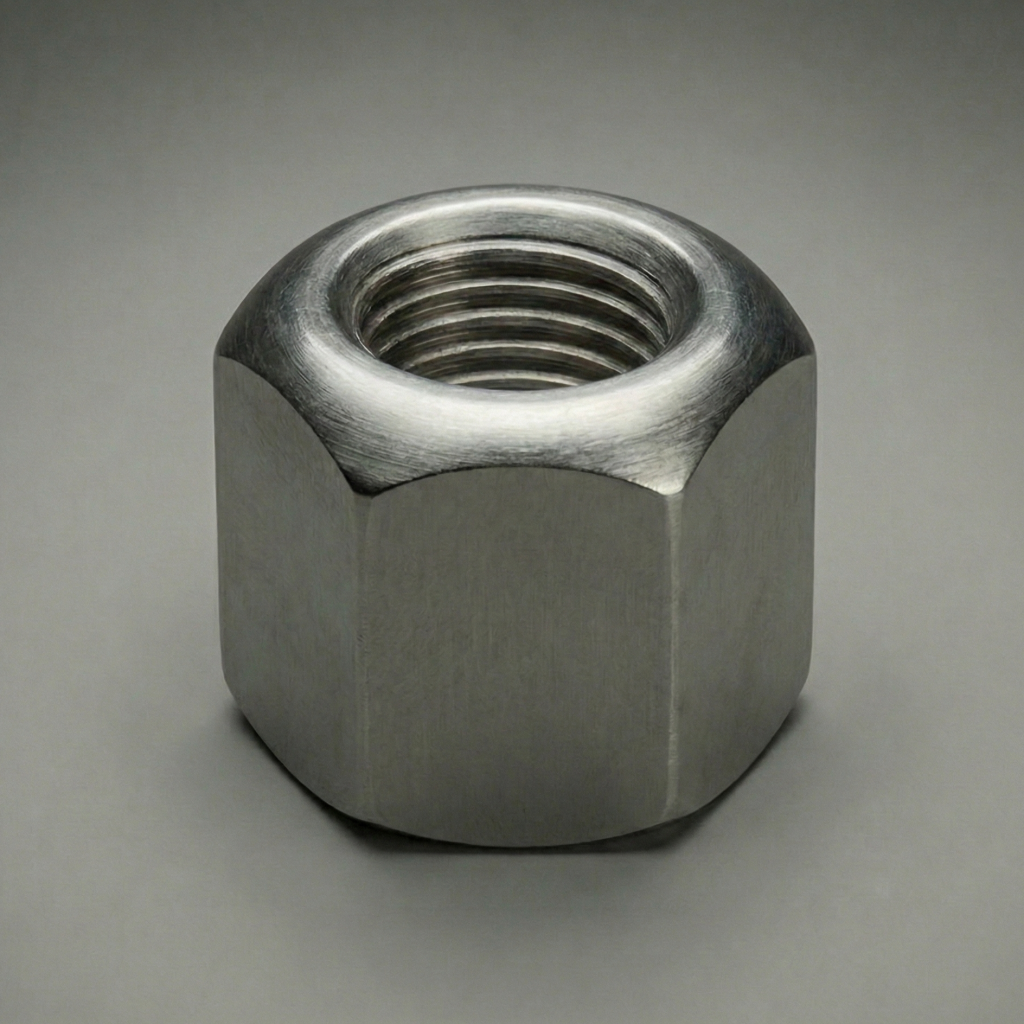
B8 bolts according to ASTM standards, to ensure chemical compatibility ASTM A194 Grade 8 should be used with nuts.
No, galvanizing stainless steels is technically not recommended and unnecessary. The material is already corrosion resistant.

 Türkçe
  English
  Русский
  Deutsch
  العربية