





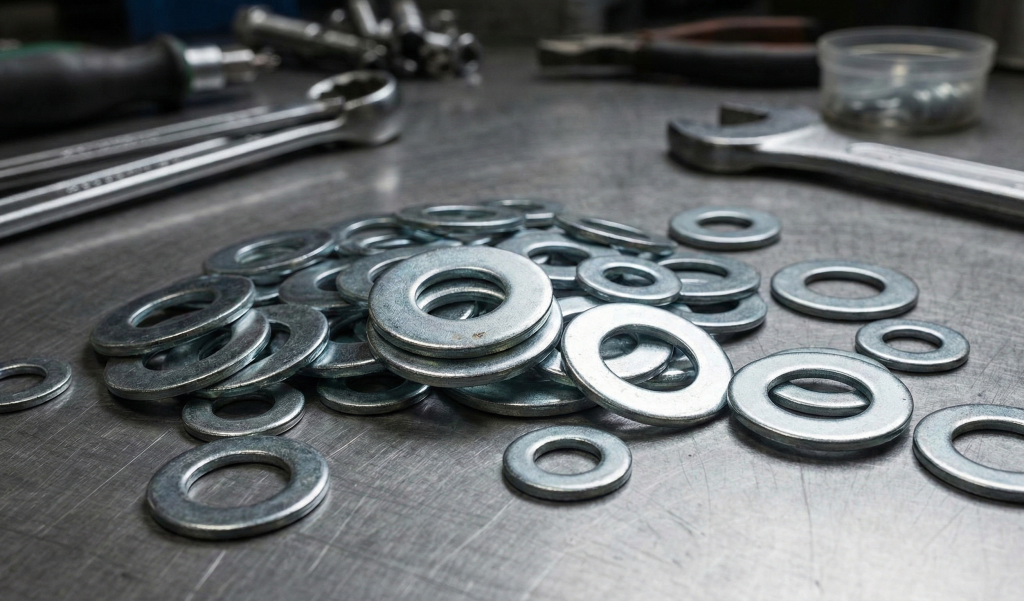
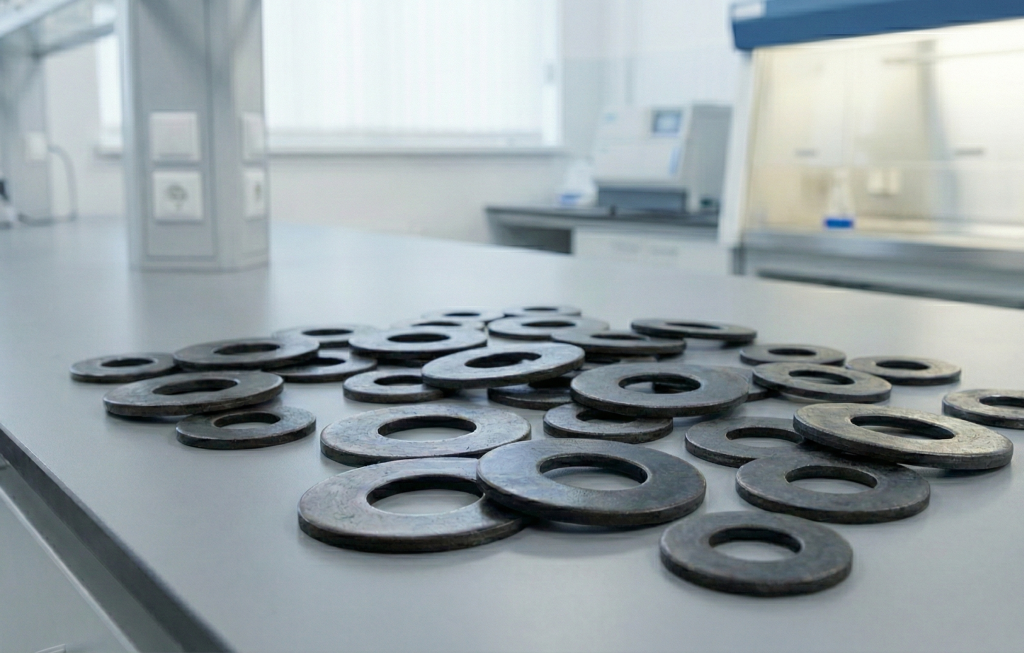
DIN 126 Flat washers manufactured to standard specifications ensure that the load is distributed evenly across the connection surface in bolt and nut combinations. This prevents the fasteners from damaging the surface and makes the clamping force more stable. They are typically preferred for connections requiring a large surface area and on soft material surfaces.
| Feature | |
| Standard | DIN 126 – Flat Washer |
| Type | Flat Washer |
| Material | Carbon Steel, Stainless Steel (A2, A4), Brass |
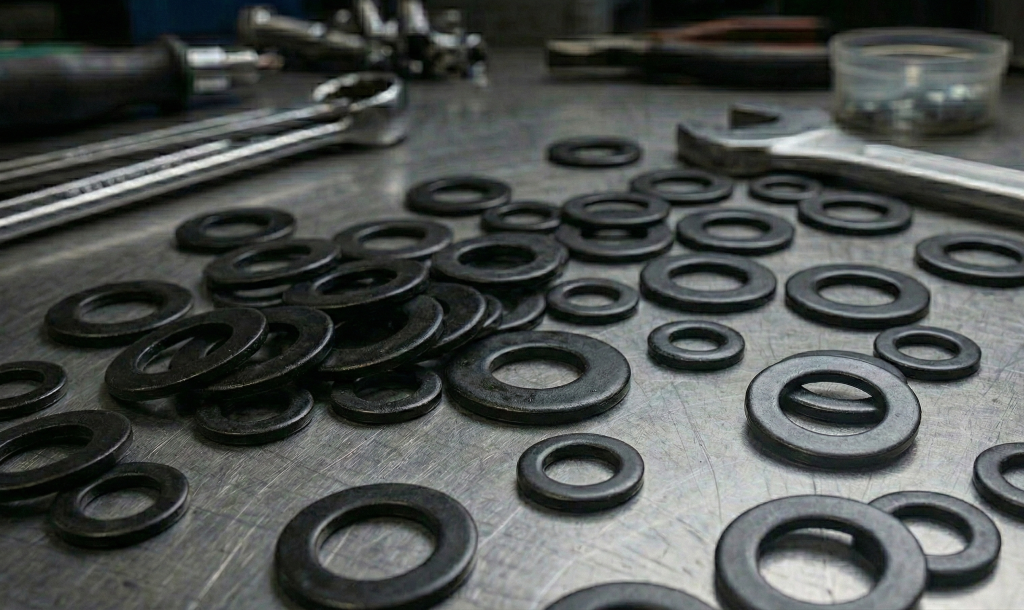
| Coating | Electrogalvanized (White/Yellow), Hot-Dip Galvanized (HDG), Nickel, Black Oxide, Dacromet, Geomet |
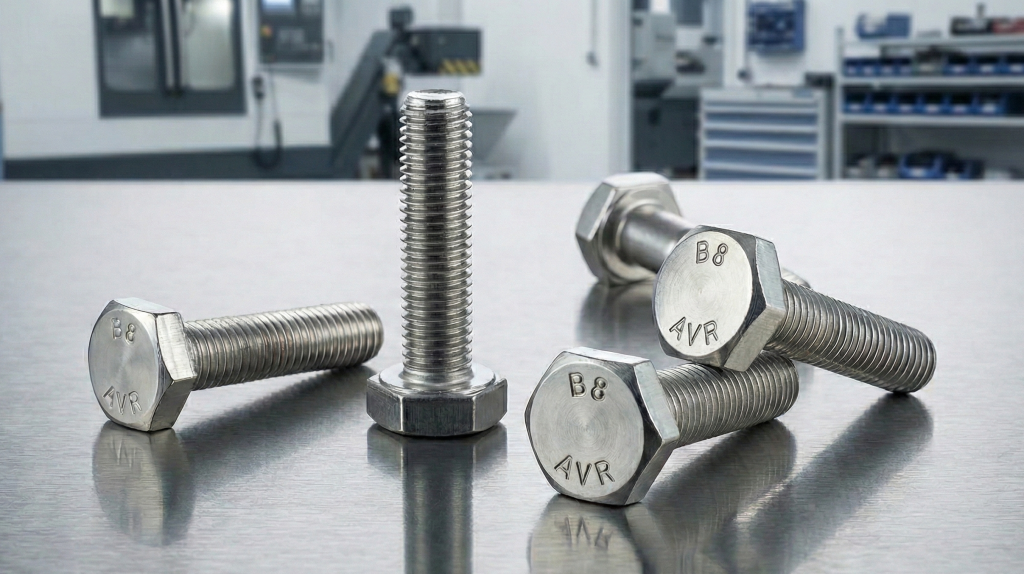
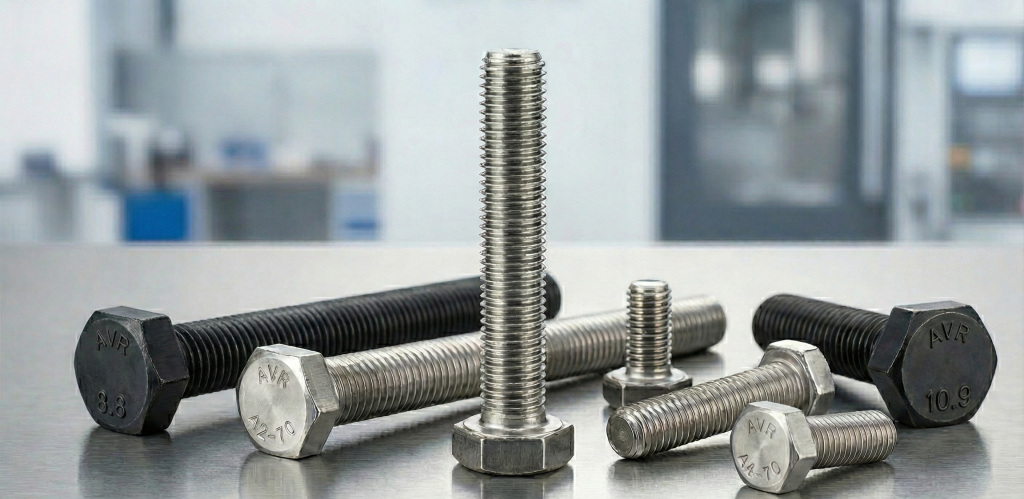
| Compatible Standards | DIN 933, DIN 931, DIN 934, DIN 939, ISO 4017, ISO 4032 |
| Measurement Range | From M3 to M100 |
| Production Method | Cold or Hot Forging, Machining, Pressing |
| Heat Treatment | Optional |
- Machinery and equipment installation
- Construction and steel structure systems
- Automotive industry fasteners
- Installation of white goods and electronic devices
- Furniture and light construction systems
- Piping, valve, and flange connections
- As a stabilizing pulley in systems exposed to vibration
- ISO 9001:2015 Quality Management System
- ISO 14001:2015 Environmental Management System
- ISO 45001:2018 Occupational Health and Safety Management System
- EU Declaration of Conformity (PED) certificate (Compliance with the Pressure Equipment Directive)
- Our production processes, DIN, EN, ISO, and ASTM is fully compliant with the standards
- Upon request EN 10204 3.1 certificate is provided
DIN 126 is the standard for flat washers. Placed under bolts and nuts, they ensure that the load is distributed more widely across the surface. They prevent surface damage and increase connection stability.
DIN 126 washers are used in a wide range of industries, including machine manufacturing, automotive, furniture, white goods, and steel construction. They are particularly preferred when soft surfaces or wide surface support is required.
Both washers are flat type, but DIN 126 has a wider inner diameter tolerance than DIN 125. Therefore, different versions can be preferred according to specific design requirements.

 Türkçe
  English
  Русский
  Deutsch
  العربية